創作者介紹|Naceku 何晏妤
開放式關係的核心,在於突破單一伴侶框架的情感實踐。本次創作以多重伴侶關係為概念起點,關注在建立關係的過程中,如何抵達知情同意、尊重、責任與規則共識。透過這樣的實踐經驗,創作者得以看見自身情感的流動、界線的劃定,以及主體樣貌的逐步形成。
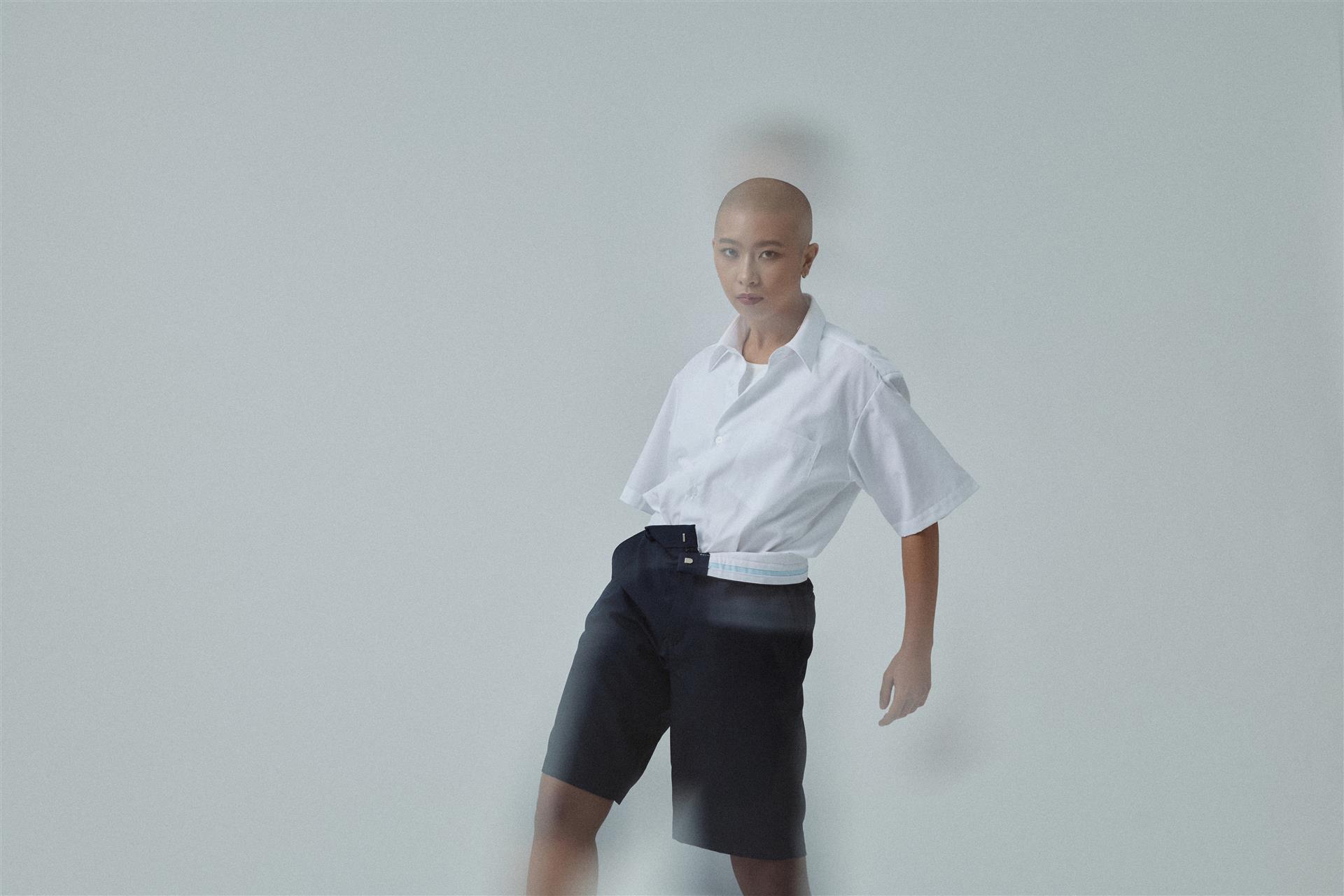
作品以「土地宣言」行動的意識為主軸,創作者以展現多重身份、文化與性別的服裝符號包覆身體,透過混種的肢體語彙與動能,在身體與符號之間的抵抗與協商中褪去身份被定義的限制,回應並跳脫社會投射與想像;同時拒絕被觀看所定義,使文化符號不再僅止於可辨識的形象,而是在斷裂與擾動中生成新的身體語言。透過讓觀看失效,進一步堆疊出原住民族群與土地長久連結的回響,揭露墾殖敘事下對原住民族影響的未竟揭示,並將這樣的回應擴展至社會層面,開啟「土地宣言」在台灣發生的可能。
Performer Introduction|Naceku
Naceku is a performance artist of Pinuyumayan and Taiwanese Han descent. Graduated from the Department of Dance at the University of Taipei. Naceku’s artistic practice is nourished by embodied experience, examining the sensory and resistant experiences that emerge from intersecting identities. They focus on how Indigenous culture, queer narratives, and non-binary gender identities are perceived, challenged, and reimagined within Taiwanese society nowadays. Through contemporary dance language and corporeal inquiry, Naceku continuously engages with the complexities of being both Indigenous and Taiwanese Han, while also exploring the expressive potential and emotional intensity of non-binary embodiment. Their work aims to construct an open mode of storytelling, where identity is not a fixed frame but a force of fluidity, transformation, and connection.
The work Where Are The Snails was presented at the 2025 Come Out Festival, 2025 Pulima Arts Festival, and 2025 Grasstraw Festival. It was also invited for presentation at the 2024 Toronto–Taipei Interlink Open Studio, and was selected for the 2023 Pulima Art Award – Performance Creation Open Call.Another work, Polyamory, received the Excellence Award in the 2025 Pulima Art Award – Performance Creation Open Call, while Other was presented at the Women Circus Platform.As a performer, the artist have also participated in productions and festivals including the Biennale de la Danse de Lyon, Taipei Arts Festival, Taipei Poetry Festival, and the international residency exchange “Dance South” Chiayi Residency Program. In 2025, they were selected as a Taiwanese participating artist in the Perth Moves International Dance Workshop.Through both action and creation, they continue to examine the boundaries of the body, using artistic practice as a means to intervene in social and cultural contexts while responding to the unfinished conditions of the present.
Program Title| Polyamory
At its core, an open relationship is an emotional practice that moves beyond the framework of monogamy. This work takes polyamorous relationships as its conceptual point of departure, focusing on how mutual consent, respect, responsibility, and shared agreements can be reached in the process of building relationships.Through these lived experiences, the creator reflects on the fluidity of emotions, the negotiation of boundaries, and the gradual formation of one’s sense of self.This practice and exploration of relationships further extends into reflections on cultural identity. As a Pinuyumayan individual who grew up in an urban environment and was largely shaped by Han culture, the creator, upon reconnecting with and relearning their own cultural heritage in recent years, has come to deeply sense the differences between these two worldviews.Through this process, they have also become aware of how colonial and reclamation perspectives—operating through acts of gazing, classification, and labeling—have constructed society’s understanding and imagination of Indigenous peoples. These external gazes profoundly influence the way one sees oneself, often leading to a form of self-colonization. Within different ethnic and social contexts, identity may transform, blur, or transform in response to the surrounding environment.Such experiences reveal how social structures shape our sense of self and, in turn, influence the ways we come to understand others.In response, the creator turns to the body as a point of departure, attempting through artistic practice to respond to and loosen the cultural and social stereotypes embedded within. Within a condition that is plural, heterogeneous, and constantly shifting, the work seeks to articulate a subjectivity grounded in self-decolonization.
The work takes the consciousness of a land acknowledgement as its central core. The performer envelops their body with costume symbols that embody multiple identities, cultures, and genders. Through hybrid, chaos-like physical vocabularies and kinetic forces, the body negotiates and resists the symbolic structures imposed upon it, shedding the constraints of predefined identities and responding to — while simultaneously escaping from — social projections and imaginations.At the same time, the work refuses to be defined by the act of being seen. Cultural symbols are no longer presented merely as recognizable images; instead, they generate new bodily languages through rupture and disruption. By rendering the act of viewing unstable, the performance accumulates resonances of the enduring relationship between Indigenous peoples and the land. It reveals the yet-unresolved impacts of settler-colonial narratives on Indigenous communities and extends this response toward the broader social sphere, opening up the possibility for the practice of land acknowledgement to emerge within the Taiwanese context.
Creative & Production Team 創作/製作群
Director / Choreographer / Performer 編導創作/表演者|何晏妤 Naceku
Rehearsal Assistant 排練協力|林慧盈Winnie
Sound Design 聲響設計|賴魯犇Ruben Rübe
Production Assistant 製作助理|陳俞臻Chen, Yu-Chen
Dramaturgy Crew 戲劇構作群|
Technical Coordination & Execution 技術統籌/執行|混將有限公司Blend,.Co.
延伸閱讀:
➤ Article 專訪|Naceku 何晏妤