創作者介紹|marang aly李杰
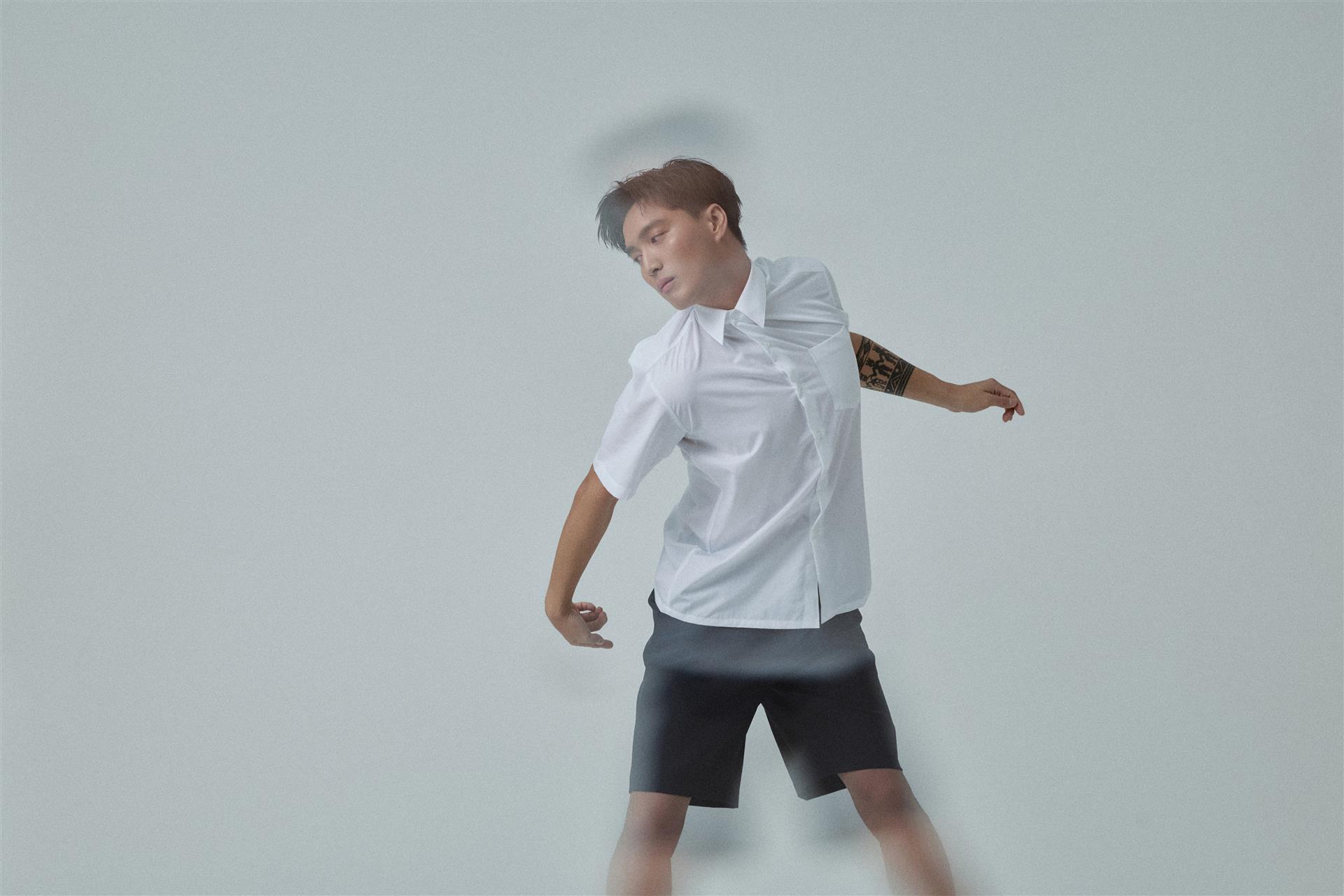
太巴塱部落阿美族,出生成長於宜蘭。因母親為文化工作者,自幼即浸潤於部落 ilisin(年祭)等文化場域,對自身族群文化懷有深厚情感與使命。畢業於國立東華大學原住民族樂舞與藝術學士學位學程,現為冉而山劇場藝術行政、 ilaLan 實驗場發起人。創作形式以身體、劇場、影像、策展為媒介,作品多從語言哲思的多譯性切入,透過文化寓意、儀式場域、個人與集體的現代經驗提煉,試圖在混雜身份的縫隙中,探討族群當代處境與社會現象。
節目名稱|《身話:傳說》
Performer Introduction|marang aly
An pangcah (amis) from the tafalong community, born and raised in Yilan. With a mother who is a cultural worker, marang was immersed from an early age in cultural contexts such as ilisin (the ritual of tribe), cultivating a deep emotional connection and sense of responsibility for his Indigenous heritage. He graduated from the Indigenous Performance and Arts at National Dong Hwa University, and currently work as an arts administrator at Langasan Theatre, as well as the initiator of the ilalan experimental fields.His creative practice spans the body, theatre, video, and curatorial work. His works often begin from the multiplicity and translatability of language, drawing on cultural symbolism, ritual spaces, and both personal and collective contemporary experiences. Through this approach, marang seeks to explore the contemporary conditions of Indigenous identity and broader social phenomena within the interstices of hybrid subjectivities.
Program Title|《Body Tales : Myth Tells》
Tales and Myths are a shared cultural core of human communities. They often center on themes such as creation origins, deities and heroes, natural forces, or supernatural events, through which cultures explain their beginnings, social orders, collective values, and natural phenomena. When narrated in Indigenous languages, they further reveal the collective consciousness of a culture, encompassing historical contexts, religious beliefs, literary philosophy, and at the same time carrying functions of education, warning, and entertainment. Human societies need mythic stories, for they contain profound meanings and wisdom, serving as important pathways to explore a people’s worldview and to reflect upon their histories.
Within the traditions of Indigenous peoples in Taiwan, tales are primarily transmitted through storytelling. Through stories, people can sense the rhythms of collective development and understand the teachings and reminders left by their ancestors. This work, titled 《Body Tales : Myth Tells》, regards the body as another way of storytelling — a vocabulary of dialogue and one of the most common modes of presence in performance. Through the expression of body, voice, dance, and emotion, tales are retold in the contemporary moment through the forms of “passing on” pass and “telling” speak.
The symbol “:” in the title signifies the elongated sound often found in Indigenous language pronunciation, suggesting emphasis and connection, while also metaphorically representing a bridge between cultural time, space, and the continuation of stories. In the performance, two performers respectively embody “speak” and “body”: one recounts Indigenous mythic stories through oral narration, while the other responds through bodily expression. These two modes of expression intersect, shift, and converse with each other, sometimes separating and sometimes merging within the space, allowing the “language of the body” to become a contemporary interpretation that connects with oral tale traditions.
延伸閱讀:
➤ Article 專訪|marang aly李杰
神話傳說是人類群體共同的文化核心。它們常以創世起源、神祇英雄、自然力量或超自然事件為主題,藉此解釋文化的發源、社會的秩序、群體的價值觀與自然現象。當以族群語言述說時,更能深刻展現文化的集體意念,包含歷史脈絡、宗教信仰、文學哲學,同時承載教育、警示與娛樂的功能。人類需要神話故事,因它蘊含深遠的意義與智慧,成為探索族群思想與歷史回望的重要途徑。
在臺灣原住民族的傳統中,神話的流傳方式多以「口傳」為主。透過故事,人們能感受群體發展的脈動,並領會先人留下的教誨與提醒。本次創作以《身話:傳說》為題,將「身體」視為另一種說故事的方式——它是一種對話的語彙,也是表演最常見的現身手段。藉由身體、聲音、舞蹈與情緒的表達,讓神話得以在當代以「傳」與「說」的形式重新被訴說。
題名中的符號「:」既象徵族語發音中的長音,帶有強調與連結的意味,也隱喻著文化時空與故事傳續之間的重要橋樑。演出中,兩位表演者分別扮演「說」與「身」:一位以口傳的方式述說族群的神話故事,另一位則以身體回應敘事內容。兩種表達形式相互交錯、切換與對話,於空間中時而分離、時而交融,讓「身體的話語」成為連結口傳神話的當代詮釋。
Performer Introduction|marang aly
An pangcah (amis) from the tafalong community, born and raised in Yilan. With a mother who is a cultural worker, marang was immersed from an early age in cultural contexts such as ilisin (the ritual of tribe), cultivating a deep emotional connection and sense of responsibility for his Indigenous heritage. He graduated from the Indigenous Performance and Arts at National Dong Hwa University, and currently work as an arts administrator at Langasan Theatre, as well as the initiator of the ilalan experimental fields.His creative practice spans the body, theatre, video, and curatorial work. His works often begin from the multiplicity and translatability of language, drawing on cultural symbolism, ritual spaces, and both personal and collective contemporary experiences. Through this approach, marang seeks to explore the contemporary conditions of Indigenous identity and broader social phenomena within the interstices of hybrid subjectivities.
Program Title|《Body Tales : Myth Tells》
Tales and Myths are a shared cultural core of human communities. They often center on themes such as creation origins, deities and heroes, natural forces, or supernatural events, through which cultures explain their beginnings, social orders, collective values, and natural phenomena. When narrated in Indigenous languages, they further reveal the collective consciousness of a culture, encompassing historical contexts, religious beliefs, literary philosophy, and at the same time carrying functions of education, warning, and entertainment. Human societies need mythic stories, for they contain profound meanings and wisdom, serving as important pathways to explore a people’s worldview and to reflect upon their histories.
Within the traditions of Indigenous peoples in Taiwan, tales are primarily transmitted through storytelling. Through stories, people can sense the rhythms of collective development and understand the teachings and reminders left by their ancestors. This work, titled 《Body Tales : Myth Tells》, regards the body as another way of storytelling — a vocabulary of dialogue and one of the most common modes of presence in performance. Through the expression of body, voice, dance, and emotion, tales are retold in the contemporary moment through the forms of “passing on” pass and “telling” speak.
The symbol “:” in the title signifies the elongated sound often found in Indigenous language pronunciation, suggesting emphasis and connection, while also metaphorically representing a bridge between cultural time, space, and the continuation of stories. In the performance, two performers respectively embody “speak” and “body”: one recounts Indigenous mythic stories through oral narration, while the other responds through bodily expression. These two modes of expression intersect, shift, and converse with each other, sometimes separating and sometimes merging within the space, allowing the “language of the body” to become a contemporary interpretation that connects with oral tale traditions.
Creative & Production Team 創作/製作群
Artist 創作者|marnag aly 李杰
Performer 表演者|marnag aly 李杰、maya' a taboeh hayawan 羅媛
Sound & Music Producer 音樂製作|杜彥鵬 Pupunu
Costume Designer 服裝設計|阮原閩 Siyat Moses
延伸閱讀:
➤ Article 專訪|marang aly李杰